Three Ways to Map an Uncertain Question
Three-way scenario mapping helps you spot hidden assumptions, identify workable boundaries, and choose a flexible response when an important decision is uncertain.
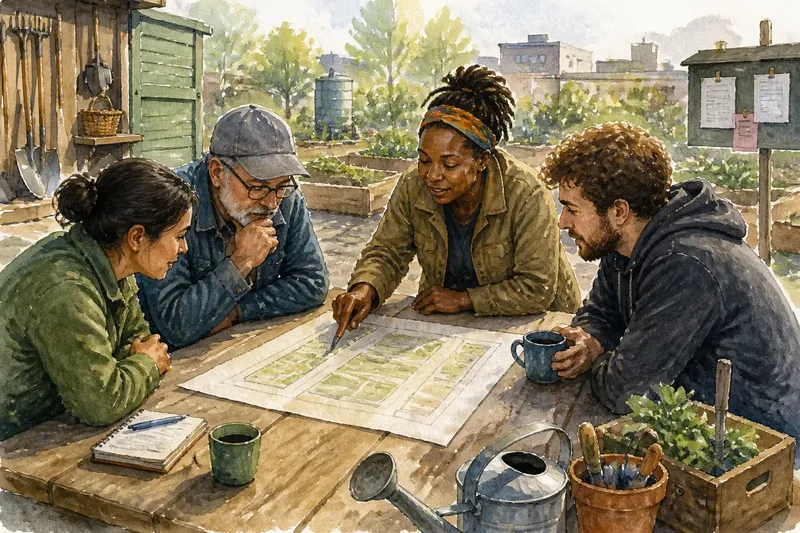
You have a free afternoon, a blank sheet of paper, and a community garden plan that depends on volunteers. Three-way scenario mapping can reveal what the plan needs to work before you commit people’s time or money. Instead of telling a story about what might happen, use each scenario to locate a different pressure point in the plan.
What should each scenario help you decide?
Start with one practical question, such as: “What would make this garden project manageable through its first growing season?” Keep the same question and time horizon for all three scenarios. Then give each scenario a distinct job: expose the plan’s appeal, test its basic operating needs, or locate the point where it should change.
This is different from choosing a best, middle, and worst future as if they were competing predictions. The useful comparison is between the conditions each version makes visible. A coherent scenario should explain how those conditions affect the decision.
Write each version in a few sentences, using concrete details: who does the work, which tasks need attention, and what resources the plan requires. Leave out events that would not change your choice or preparation.
How can a favorable scenario expose hidden dependencies?
Describe a version in which the project works especially well, but do not remove every obstacle. The aim is to see what you are counting on, not to write a wish list. For the garden, a favorable version might involve neighbors signing up for regular tasks, a nearby library lending tools, and a clear schedule for watering.
Now ask which of those conditions are already confirmed and which are assumptions. If the plan only seems attractive because one person quietly covers every unclaimed task, that dependency belongs on the page. The favorable scenario can show both what you value and what the project may be taking for granted.
Keep the useful upside; name the support it requires.
What does an ordinary operating scenario test?
Describe a mixed, workable version rather than an imagined average. Some people may help consistently while others appear only occasionally; the library may lend tools but not deliver them. Ask how the routine would function under those conditions, and what would need to be simpler.
This scenario is useful for testing the design of the work. Could the garden use a shared watering calendar? Could a smaller plot be maintained if volunteer coverage is uneven? The answer helps separate a project’s essential tasks from the features that can wait.
Pay attention to handoffs. If one person needs to know who watered last, for example, decide where that information will live: a paper log in the shed, a shared calendar, or a note on the garden’s noticeboard.
Where should the difficult scenario draw a boundary?
Choose a challenging chain of events that could change what you are willing to do, without piling on unrelated disasters. In the garden plan, imagine that the volunteer coordinator becomes unavailable and the remaining group cannot cover weekly watering. That pressure point is more useful than adding a storm, a funding dispute, and a tool shortage if those details do not affect the decision.
Ask what response would protect people from being left with an unmanageable obligation. The answer might be to reduce the planting area, pause new beds, or arrange a named backup before planting. A boundary makes the plan adjustable rather than dependent on one person absorbing every shortfall.
Write down the condition that would trigger a change, then name the change itself.
How do you turn the three views into a decision?
Imagine a neighborhood group with a vacant paved lot, permission to use a small corner, and no confirmed watering rota. Its favorable version assumes neighbors take weekly shifts; its ordinary version assumes some shifts go uncovered; its difficult version assumes the organizer cannot coordinate the group. The group notices that the planting plan depends less on enthusiasm than on reliable watering.
They take these steps:
- They ask the library whether a watering can and basic hand tools can be borrowed; the answer determines whether equipment must be sourced elsewhere.
- They draft a rota with named volunteers and ask each person to confirm a shift; uncovered weeks mean the planting area must shrink.
- They choose a paper log kept beside the water source; if volunteers cannot reliably update it, they will use a simpler handoff method.
- They name a backup coordinator; if no one accepts that role, they will delay planting rather than leave the duty implicit.
- They set a review point after the first scheduled watering period; if coverage has already failed, they will pause expansion and revise the rota.
The resulting decision is conditional: proceed with a smaller garden if equipment, named coverage, and backup coordination are in place; otherwise delay planting. These steps do not predict volunteer behavior. They show the group what to confirm and what action follows from each answer.
Which scenario questions help sharpen the exercise?
Should the three scenarios be equally likely?
No. Their purpose is to expose different conditions and decision pressures, not to divide the future into balanced odds. Keep each version relevant to the question you are trying to answer.
How many details should a scenario include?
Include enough detail to explain how the situation develops and why it changes your choice. If a detail does not affect a task, boundary, or next action, leave it out.
Can I change the plan after writing scenarios?
Yes. Treat the scenarios as a way to identify adjustments, not as fixed stories. You might reduce the project’s scope, confirm a resource, or set a condition for pausing.
What if I cannot confirm an important condition?
Mark it as unresolved and decide how the plan should handle that uncertainty. If the decision depends on another person’s policy or commitment, ask them directly before treating it as settled.
Which checks should lead to an action?
- Volunteer coverage: Observe whether named people confirm the scheduled shifts; if every essential shift has coverage, keep the planned area, and if not, reduce the planting area or delay.
- Backup responsibility: Observe whether someone accepts the backup coordinator role; if a person agrees, record the handoff, and if nobody does, pause until the role is covered.
- Tool access: Observe whether the library confirms borrowing arrangements; if the needed tools are available, use that option, and if not, ask the group to source tools before planting.
- Watering handoff: Observe whether volunteers can use the paper log; if entries are clear, keep it, and if they are missed or confusing, switch to a simpler shared handoff.
- Workload: Observe whether the rota leaves essential tasks unassigned; if all tasks have owners, proceed with the current scope, and if not, remove nonessential tasks or shrink the project.
- Early delivery: Observe whether the first scheduled watering is completed and logged; if it is, continue while checking coverage, and if it is not, pause expansion and revise the schedule.
Three-way scenario mapping is most useful when each view leads to a specific check, boundary, or change in the plan. For an uncertain decision, keep the question narrow, name what would alter your choice, and decide in advance what you will do if that condition is absent.